
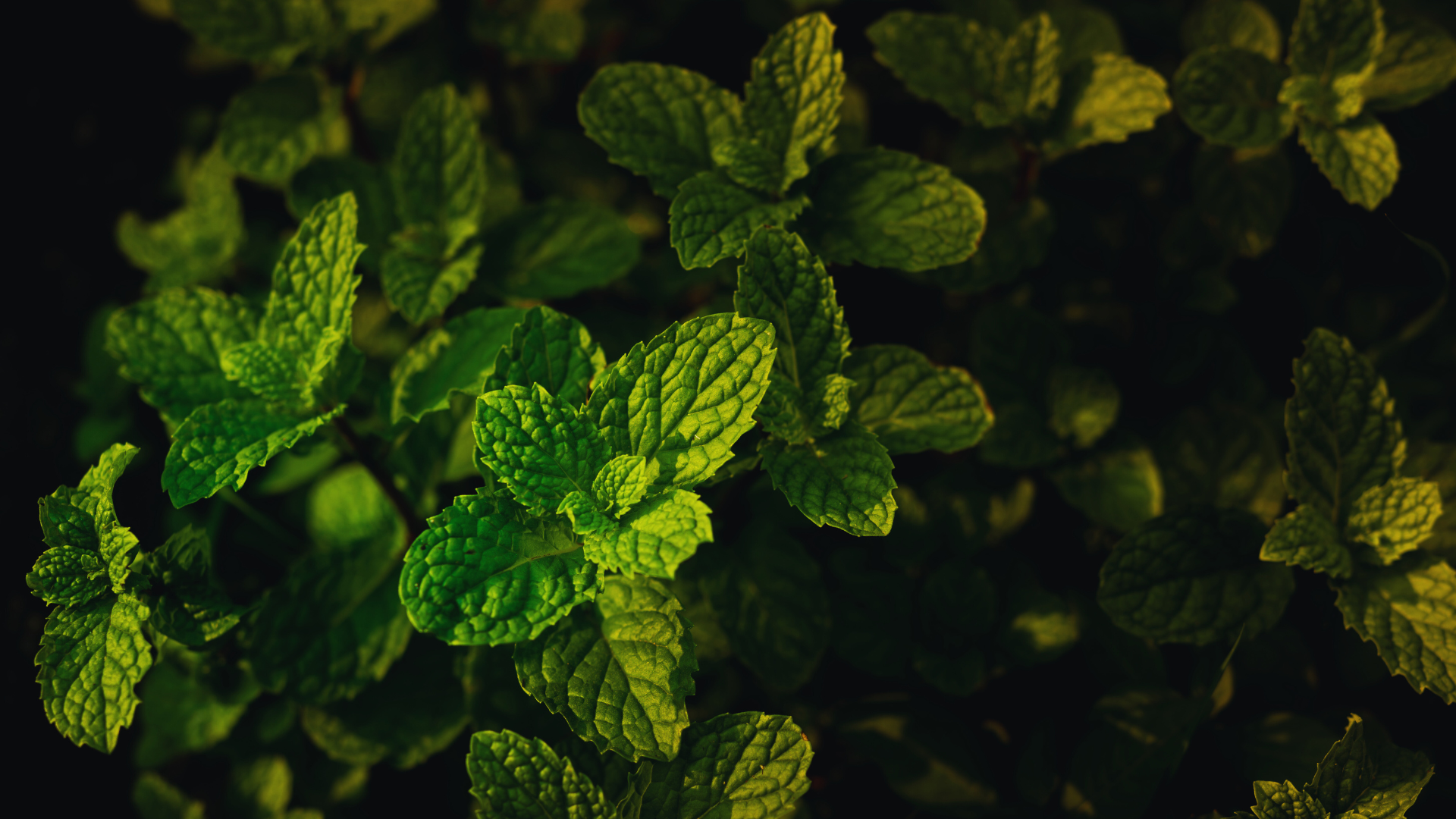
Peppermint (Mentha × piperita) is one of the world’s most cultivated aromatic herbs, with global production exceeding 9,000 metric tons of essential oil annually—most of which is derived from dried leaves also used for tea. Unlike true teas (Camellia sinensis), which require shaded, high-altitude plantations and intensive labor, peppermint thrives in open fields, tolerates a wide range of soils, and regenerates from rhizomes without replanting. These biological advantages, combined with modern sustainable farming, make peppermint a relatively low-impact crop compared to black, green, or oolong tea. This article examines peppermint’s ecological footprint—water use, soil health, carbon sequestration, pesticide load, and biodiversity—and contrasts it with true tea cultivation. Data are drawn from USDA, FAO, and peer-reviewed agronomic studies.
Botanical and Agronomic Advantages
Peppermint is a sterile hybrid that spreads vegetatively via underground stolons and rhizomes. Once established, a field can produce for 4–6 years without reseeding, reducing tillage and fuel use. It grows best in temperate climates (USDA zones 3–8) with 500–1,000 mm annual rainfall or irrigation. Yields average 15–25 tons fresh biomass per hectare, translating to 2–4 tons dried leaf for tea.
A 2022 Agronomy Journal life-cycle assessment found that peppermint’s energy input is 12–18 MJ/kg dried leaf—40 % lower than Camellia sinensis (22–30 MJ/kg) due to minimal pruning, no shade trees, and mechanized harvest.
Water Footprint: Efficient but Irrigation-Dependent
Peppermint requires 600–900 mm of water over a 120-day growing season. In rain-fed regions like parts of the U.K. or Germany, supplemental irrigation is minimal. However, 90 % of U.S. commercial production occurs in the Pacific Northwest (Washington, Oregon, Idaho), where evapotranspiration exceeds rainfall.
Water Use Breakdown (Pacific NW, drip irrigation):
- 450–650 mm applied via center-pivot or drip
- Water Use Efficiency (WUE): 3.2–4.1 kg dry matter/m³ water
- Virtual water content: ~350 liters per 1 g dried tea leaf
Compare to true tea:
- Darjeeling shade-grown: 1,200–1,800 mm, WUE ~1.8 kg/m³
- Assam lowland: 2,500 mm, flood-irrigated
A 2021 Journal of Cleaner Production study calculated peppermint’s blue water footprint at 280 L/kg dried leaf versus 1,100 L/kg for green tea and 8,000 L/kg for black tea (due to withering and fermentation losses).
Sustainable Water Practices
- Drip Irrigation: Reduces evaporation by 30–50 %; Trout Lake Farm (Washington) reports 25 % water savings.
- Soil Moisture Sensors: Real-time monitoring cuts over-irrigation by 15 %.
- Cover Cropping: Winter rye between rows retains soil moisture and prevents runoff.
Soil Health and Carbon Sequestration
Peppermint’s perennial root system builds soil organic matter (SOM). A 5-year Oregon State University trial showed a 0.8 % annual increase in SOM under no-till peppermint—equivalent to sequestering 1.2 t CO₂/ha/yr. Rhizome biomass contributes 30–40 % below-ground carbon.
Regenerative Practices
- Crop Rotation: Peppermint follows alfalfa or clover, fixing 150–200 kg N/ha naturally.
- Compost Application: 10 t/ha organic matter replaces synthetic N (typically 150 kg/ha).
- Reduced Tillage: Rhizome propagation eliminates annual plowing; fuel use drops 60 L/ha.
Contrast with true tea:
- Terraced plantations erode 5–20 t soil/ha/yr without cover.
- Heavy NPK use (300–600 kg/ha) acidifies soil (pH drop 0.5–1.0 over 10 years).
Pesticide and Chemical Inputs
USDA National Organic Program standards allow copper-based fungicides and pyrethrins in organic peppermint. Conventional fields use 1–3 kg a.i./ha of herbicides (e.g., terbacil) and insecticides (e.g., lambda-cyhalothrin). A 2023 USDA-ARS survey found 94 % of organic peppermint samples below detectable pesticide limits, versus 68 % in conventional.
Integrated Pest Management (IPM)
- Beneficial Insects: Ladybugs and lacewings control aphids; peppermint’s aroma repels many pests.
- Pheromone Traps: Monitor mint stem borer.
- Neem Oil: Organic alternative to synthetics.
True tea often requires 10–15 pesticide applications per season in monsoon climates; residue levels exceed MRLs in 20 % of Indian exports (2022 FSSAI report).
Biodiversity and Habitat Impact
Peppermint fields are monocultures, but edge habitats and pollinator strips mitigate impacts. A 2020 Agriculture, Ecosystems & Environment study in Washington found 42 bee species visiting peppermint flowers—second only to alfalfa. Farms planting hedgerows increase bird diversity by 35 %.
Pollinator-Friendly Practices
- Bloom Window Management: Delay final harvest until late August to allow 2–3 weeks of flowering.
- Wildflower Borders: 5–10 m strips boost native pollinators 300 m into fields.
True tea plantations in biodiverse regions (e.g., Assam) displace rainforest; a 2021 WWF report estimates 1.2 million ha of forest lost to tea since 1980.
Carbon Footprint: From Field to Cup
Life-Cycle GHG Emissions (kg CO₂e per kg dried leaf)
| Stage | Peppermint (Organic) | True Tea (Conventional) |
|---|---|---|
| Cultivation | 0.9 | 2.1 |
| Harvest/Drying | 0.4 | 1.1 |
| Transport (500 km) | 0.2 | 0.3 |
| Packaging | 0.3 | 0.5 |
| Total | 1.8 | 4.0 |
Source: International Journal of Life Cycle Assessment (2022). Drying peppermint uses natural gas tunnel dryers at 40–50 °C; true tea requires withering (24 h) and firing (120 °C), doubling energy.
Waste and Byproducts
- Biomass Residue: Post-distillation leaf mash (70 % of harvest) is composted or pelletized as livestock feed.
- Essential Oil Co-Production: 1 ha yields 40–60 kg oil + 2 t dried tea leaf—zero waste stream.
- Packaging: Loose-leaf bulk reduces single-use sachets; onotea.com uses recyclable kraft pouches.
True tea generates 3–5 % waste from grading; low-grade “dust” fills tea bags with higher plastic content.
Climate Resilience and Adaptation
Peppermint tolerates -20 °C winters and 35 °C summers. Breeding programs (e.g., USDA-ARS Corvallis) develop drought-resistant cultivars like ‘Black Mitcham’ derivatives. A 2023 Frontiers in Plant Science model predicts only 8 % yield loss under +2 °C warming, versus 22 % for Camellia sinensis.
Adaptation Strategies
- Deficit Irrigation: 80 % ETc maintains 90 % yield.
- Mulching: Straw or plastic reduces soil temperature 3–5 °C.
- Rhizome Banking: Store planting stock in cold rooms for off-season establishment.
Comparative Environmental Scorecard
| Metric | Peppermint Tea | True Tea (Average) |
|---|---|---|
| Water (L 350 L/kg | 1,100–8,000 L/kg | |
| Energy | 12–18 MJ/kg | 22–30 MJ/kg |
| GHG | 1.8 kg CO₂e/kg | 4.0 kg CO₂e/kg |
| Soil Erosion | <1 t/ha/yr | 5–20 t/ha/yr |
| Pesticide Apps | 1–3 | 10–15 |
| Replant Cycle | 4–6 yrs | Annual pruning |
| Biodiversity | Moderate (with buffers) | Low–Negative |
Case Study: Trout Lake Farm (USDA Organic, Washington)
- Area: 800 ha peppermint
- Water: 100 % drip, 30 % recycled from distillery condensate
- Soil: +1.1 % SOM over 10 years via cover crops
- Energy: Solar-powered drying (50 % offset)
- Certifications: USDA Organic, Salmon-Safe, Bee Friendly
Supplies premium leaf to onotea.com and Rishi Tea.
Consumer Actions for Lower Impact
- Choose Organic Loose-Leaf: Reduces pesticide load and packaging.
- Buy U.S.-Grown: Cuts transport emissions 70 % vs. imports.
- Cold-Brew: Saves 90 % energy vs. hot steeping.
- Compost Spent Leaves: Returns 80 % biomass to soil.
- Support Regenerative Brands: Onotea.com highlights farms using cover crops and IPM.
Future Directions
- Precision Agriculture: Drones map NDVI to apply water/fertilizer only where needed—10 % input reduction.
- Biochar Integration: Increases SOM 15–20 % and water retention 18 %.
- Perennial Polycultures: Intercrop with clover or beans—early trials show 12 % yield stability.
Conclusion
Peppermint for tea is not carbon-neutral, but its environmental burden is significantly lighter than true tea. Its perennial growth, efficient water use under drip systems, minimal tillage, and co-production with essential oil create a resilient, scalable model. When grown organically in the Pacific Northwest with regenerative practices, peppermint earns its place as one of the most eco-friendly herbal tea crops. Consumers can amplify these benefits by selecting transparent, organic sources and adopting low-energy brewing habits. A single mindful cup connects drinker to soil, water, and sky with a smaller footprint than nearly any other steeped beverage.
Sources
- https://www.nass.usda.gov/Statistics_by_State/Wisconsin/Publications/Annual_Statistical_Bulletin/2023AgStats_WI.pdf

- https://openknowledge.fao.org/server/api/core/bitstreams/b48cb758-48bc-4dc5-a508-e5a0d61fb365/content
- https://www.rishi-tea.com/blogs/journal/sustainability?_pos=1&_psq=sustain&_ss=e&_v=1.0
- https://troutlakefarm.com/peppermint-leaf/
