There’s something delightfully magical about finishing your cup of tea and gently swirling the last few drops so the leaves settle into mysterious patterns at the bottom. You tilt the cup, peer inside, and suddenly a heart shape, a bird in flight, or a winding path seems to appear among the damp leaves. For centuries, people have found meaning, comfort, and entertainment in these random patterns through the ancient art of tasseography — reading tea leaves.
Also known as tasseomancy or simply tea leaf reading, this gentle divinatory practice turns an everyday ritual into a moment of intuition, storytelling, and connection. While it may not offer literal predictions of the future, tasseography provides a playful way to tap into your subconscious, spark meaningful conversations, and add a touch of wonder to ordinary afternoons. In this warm, lighthearted guide, we’ll trace the fascinating history of tea leaf reading, explore common symbols and their traditional interpretations, examine its cultural roots, and share practical, modern ways to incorporate this charming practice into gatherings or quiet self-reflection. Settle in with a fresh cup, and let’s discover the gentle magic that can unfold at the bottom of your teacup.
The Origins and History of Tasseography
The practice of reading patterns in leftover liquid has ancient roots. People in many cultures have long looked for meaning in the dregs of wine, coffee, or other beverages. However, the specific tradition we now call tasseography became closely associated with tea in the 17th and 18th centuries as tea drinking spread across Europe and the Middle East.
The earliest documented forms of tea leaf reading appear to have developed in the Ottoman Empire and spread through trade routes into Eastern Europe. Romani (Gypsy) communities played a significant role in popularizing the practice across Europe, often combining it with other forms of cartomancy and intuitive reading. By the Victorian era in Britain, tasseography had become a fashionable parlor entertainment among the middle and upper classes. Ladies would gather for afternoon tea and take turns interpreting the leaves for fun and gentle fortune-telling.
The word “tasseography” comes from the French “tasse” (cup) and the Greek “graphia” (writing or description). In different regions, it developed slightly different styles. In the Middle East and Turkey, coffee grounds (tasseography’s close cousin) remain more popular, while in Britain and North America, tea leaves took center stage. Chinese and Japanese tea cultures, while deeply spiritual and ritualistic, traditionally focused more on the meditative aspects of tea drinking rather than reading the leaves themselves.
Throughout its history, tasseography has walked a charming line between serious divination and light entertainment. In times of uncertainty, people turned to the leaves for guidance or reassurance. During more skeptical periods, it became a playful social game. Today, it occupies a similar space — valued by some as a genuine intuitive tool and enjoyed by many simply as a fun, creative ritual that encourages reflection and connection.
How Tea Leaf Reading Works: The Basic Method
The practice itself is delightfully simple and requires no special equipment beyond a cup of loose-leaf tea and an open mind.
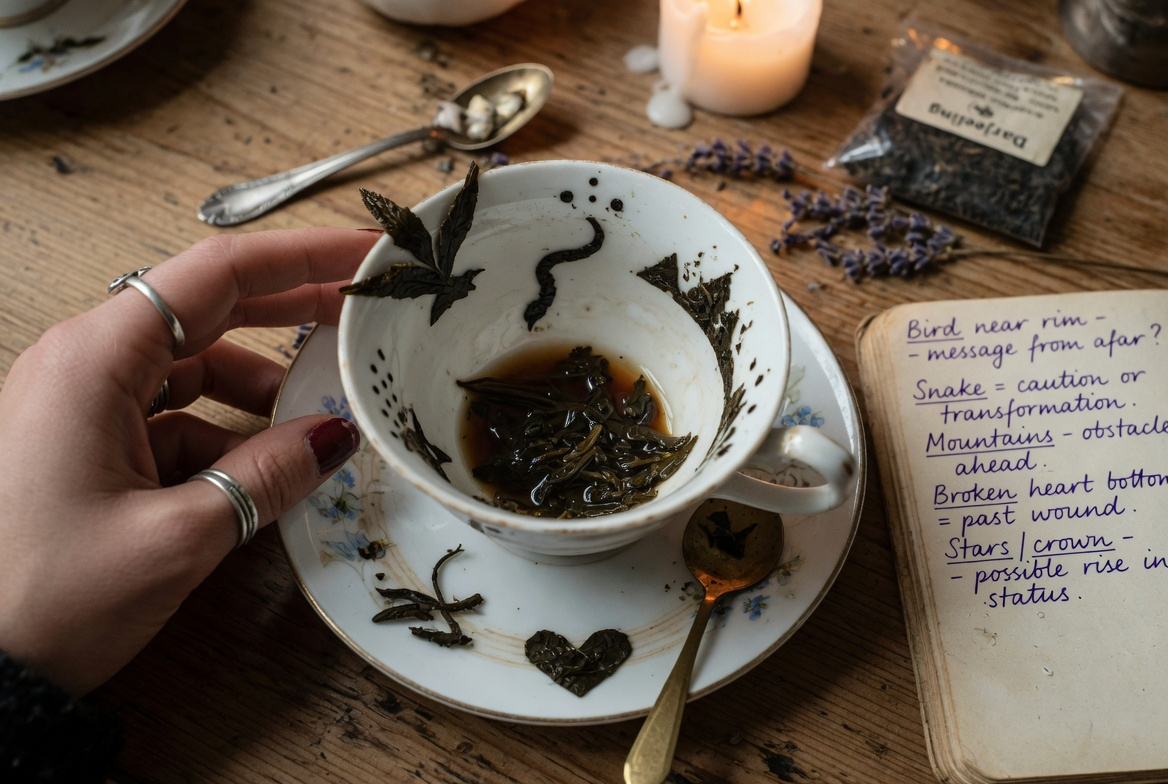
You begin by brewing a cup using loose tea leaves (bagged tea won’t work well because the leaves are too finely cut). While drinking, focus on a question or simply remain open to whatever insight might emerge. It’s traditional to leave a small amount of liquid and leaves at the bottom. Then, holding the cup in your non-dominant hand, swirl the remaining liquid and leaves three times in a clockwise direction. Quickly invert the cup onto a saucer (or napkin) to drain the excess liquid, then turn it right-side up again.
The patterns formed by the leaves on the inside of the cup are then “read.” Different parts of the cup represent different timeframes or aspects of life:
- The rim (near the top) relates to the present or near future.
- The middle section represents the medium term.
- The bottom of the cup is associated with the distant future or deeper subconscious matters.
- The handle side often represents the person asking the question or their home life.
Readers look for recognizable shapes, letters, numbers, or abstract symbols formed by the clustered or scattered leaves. The interpretation combines traditional symbolic meanings with the reader’s intuition and the specific context of the question.
Many people find the process itself meditative. The act of focusing on the patterns encourages a quiet, receptive state of mind that can surface helpful insights even if you don’t take the symbols literally.
Common Symbols and Traditional Interpretations
Over centuries, tasseographers have developed a rich vocabulary of symbols. While interpretations can vary slightly between readers and cultures, here are some of the most common ones:
- Heart: Love, romance, emotional fulfillment, or matters of the heart. A clear, well-formed heart suggests positive romantic developments; a broken or unclear one may indicate emotional challenges.
- Bird: Freedom, good news, or a journey. Flying birds often mean positive movement or messages coming your way.
- Tree: Growth, stability, or family. A strong, healthy tree suggests solid foundations; a bare or leaning tree may indicate a need for nurturing.
- House or Building: Home, security, or family matters. A well-drawn house is generally positive.
- Path or Road: Life direction, journeys (literal or metaphorical), or choices ahead. A clear, straight path suggests smooth progress; a winding or blocked path indicates obstacles or decisions needed.
- Anchor: Stability, hope, or staying grounded. Often a reassuring symbol during uncertain times.
- Clouds: Temporary confusion or uncertainty. Light clouds suggest minor worries; dark, heavy clouds may point to bigger challenges.
- Letters: Initials of people or places. “A” might refer to someone whose name begins with A, or a place starting with that letter.
- Numbers: Timeframes (e.g., 3 could mean 3 days, weeks, or months) or significant quantities.
- Animals: Each carries its own traditional meaning — a cat might suggest independence or mystery, a dog loyalty and friendship, a horse strength or travel.
- Flowers: Joy, beauty, or new beginnings. Specific flowers sometimes carry additional meanings (roses for love, lilies for purity).
The position, clarity, and size of the symbol all matter. A large, clear symbol near the rim is considered more immediate and important than a faint one at the bottom. Clusters of leaves can form scenes or stories rather than single symbols, allowing for more narrative interpretations.
Modern readers often blend traditional meanings with personal intuition. A symbol that traditionally means “travel” might feel more like “personal growth” depending on the context of the question and the reader’s own associations.
Cultural Roots and Global Variations
While tasseography became popular in Europe, similar practices of reading leftover grounds or leaves exist in many cultures. Turkish coffee fortune-telling (fal) remains extremely popular today and shares many interpretive principles with tea leaf reading. In parts of Asia and the Middle East, other forms of divination using natural materials have long traditions.
In Western occult and New Age circles, tasseography was embraced alongside tarot, astrology, and palmistry during the 19th and 20th centuries. It experienced a revival in the 1970s and continues to appeal to people seeking gentle, accessible forms of intuition and self-reflection rather than rigid prediction.
Importantly, traditional tasseography was often practiced by women and passed down informally through generations. It carried elements of folk wisdom, psychological insight, and social bonding. In many communities, the “tea reader” was a respected figure who offered guidance wrapped in storytelling and comfort.
Modern Fun: Incorporating Tasseography into Gatherings and Self-Reflection
Today, tea leaf reading has shed much of its serious divinatory reputation and emerged as a delightful, lighthearted activity perfect for modern life. It requires almost no special tools and creates wonderful opportunities for connection and creativity.
At Gatherings and Parties:
- Host a “Tea Leaf Reading Party” where guests brew their own cups and take turns interpreting for each other. Provide a simple symbol guide as a starting point, but encourage intuition and storytelling.
- Make it interactive: after everyone has read for someone else, discuss the themes that emerged. It often leads to surprisingly meaningful conversations.
- Combine with other gentle activities — tarot, journaling, or simply sharing intentions for the coming weeks.
For Personal Reflection:
- Use tasseography as a creative journaling tool. Ask a gentle question (“What should I focus on this month?”) and see what patterns emerge. Write down your observations without over-analyzing at first.
- Many people find the practice helps them access subconscious thoughts or feelings they hadn’t fully articulated. The symbolic language can bypass rational filters and reveal helpful insights.
Lighthearted Tips for Beginners:
- Use a wide-mouthed white or light-colored cup so the leaves show clearly.
- Don’t worry about being “accurate.” The fun lies in the storytelling and imagination.
- Keep interpretations positive and empowering. Frame challenges as opportunities for growth.
- Practice with friends who have a playful spirit — the best readings happen when everyone is relaxed and open.
Many modern practitioners blend tasseography with mindfulness or creative visualization. The act of looking for patterns in chaos can be a beautiful metaphor for finding meaning in everyday life.
Why Tea Leaf Reading Still Captivates Us
In our data-driven, fast-paced world, tasseography offers something refreshingly human: a gentle, imaginative space where intuition and storytelling are valued. It reminds us that not every question needs a scientific answer and that sometimes the most helpful guidance comes from within, sparked by a simple pattern in wet leaves.
Whether you approach it with serious belief or playful curiosity, tea leaf reading adds a layer of magic and connection to the already wonderful ritual of drinking tea. It turns an ordinary cup into a vessel for reflection, laughter, and shared wonder.
So the next time you finish your tea, resist the urge to rinse the cup immediately. Swirl it gently, turn it over, and see what stories the leaves want to tell. You might discover a bird carrying good news, a path leading somewhere new, or simply a moment of quiet beauty in the random arrangement of leaves. In that small, damp canvas at the bottom of your cup lies an invitation to slow down, imagine, and connect — both with yourself and with the people sharing the table.
Tea leaf reading may not predict the future with certainty, but it can beautifully illuminate the present and gently encourage us toward more mindful, creative, and connected living. One cup, one swirl, and one imaginative interpretation at a time.
